by Eleanor Schnarr
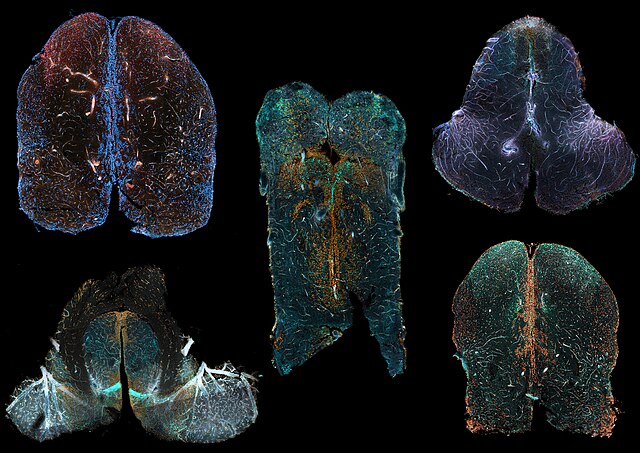
As part of my ongoing research into the long history of the mind sciences, I have maintained a persistent interest in the works of Thomas Willis (1621 – 1675). He stands at a singular threshold in the history of medicine—a moment where the advancements of medical technology began to allow for a level of surgical dissection and illustration so delicate that it fundamentally altered the visual representation of the human interior.
At the Kislak Center for Special Collections, I was thrilled to find that, although the collection holds only the first volume of the Opera Omnia1, it is a remarkably high-quality, well-preserved copy of the 1681 Lyon edition. This specific encounter with the 1681 folio—a book that exists as both a relic of a past worldview and a harbinger of the modern—enables a closer investigation of what I consider a vital inflection point in the “long” eighteenth century.
Willis’s career bridges the premodern ideas of the soul with the more materialist, embodied theories of consciousness that would eventually become popular in the eighteenth and nineteenth centuries. In the late seventeenth century, the navigation between a subjective spiritual mindset—heavily encouraged and enforced by religious institutions—and a nascent scientific culture was fraught with peril. Materialism and atheism were treated as anathema; to suggest the soul was mere matter was to risk professional and social ruin. Thus, the work of the “Oxford Circle” represents a fascinating compromise. As medical technology increasingly brought the brain into focus as a cognitive organ, persistent anxieties over morality and the divine nature of man prevented a fully materialist understanding of embodied consciousness2.
This tension birthed a lineage of works moving from the foundational anatomical architectures of Vesalius through the neurological maps of Willis and the subjectively felt “tremulations” of 3 4 Emanuel Swedenborg, eventually leading to the radical materialism of La Mettrie, the vibratory 5 6 psychology of David Hartley, the bio-electrical evidence of the Galvani partnership , and the 7 8 early neurological precursors of psychoanalysis in the work of Sigmund Freud.9
In a modern context, this history has evolved into the “Hard Problem of Consciousness,” which continues to seek a unification of subjective awareness with objective evidence. Ultimately, the primary value of deep research into this material is that it shows how humans react and navigate a world where our senses are constantly augmented by technology. Today, we might look through an fMRI; in 1681, they looked through Christopher Wren’s architectural perspective. In both cases, the technology forces us to reassess our most basic assumptions about self-awareness and the ontological nature of the universe. Therefore, the study of the history of the brain is not merely a medical chronicle; it is a means of expanding our knowledge of self, an act that remains potentially dangerous to institutions that maintain power through the definition of selfhood and epistemological power.
The Material
The artifact under consideration is a heavy, leather-bound folio of approximately 700 pages, by Dr Thomas Wills, titled Opera Omnia: Tomus Prior cum elenchis rerum et indicibus: necessariis ut et multis figuris aeneis (The Complete Works: First Volume with tables of contents and indices: both necessary and with many figures [etched] in bronze). Published in Lyon (Lugduni) by Joannes Antonius Huguetan in 1681, the volume represents a substantial investment in pan-European scholarly communication. Unlike the English editions, this Lyon printing served as a bridge to the continent, spreading Willis’s Oxford-born discoveries to the wider Republic of Letters through the distribution networks of the Huguetan family, who were central to the dissemination of scientific ideas in the seventeenth century .10
The binding itself is a honey-gold plush suede, which has degraded into a delicate, friable state. To consult the text requires a certain physical negotiation with the past; the book must be carefully propped on archival foam cradles to prevent the spine from breaking, and handling the covers leaves a fine, ochre residue upon the fingers—a material record of the book’s age. The page edges are adorned with a visceral, speckled reddish marbling, and the leaves are held together with what appears to be original silk stitching.
The typography is large and clear, with a polychrome, illuminated title page but more significant is the nature of the Neo-Latin itself. I was struck by how straightforward the grammar is. Unlike the more florid, poetic, or ornate Latin used by earlier Renaissance humanists, Willis uses a scientific Neo-Latin that favors directness and syntactic clarity. Even when Willis acknowledges his own motivated perspective—opening the text with a reverendissimo that does the work of “sanctifying” the anatomical study of the mind—the prose remains formal and precise.
The most exciting material evidence, however, lies in the anatomical plates beginning on page 245. These etchings, drawn by the architect Sir Christopher Wren and engraved by David Loggan, are often folded into the smaller leaves of the book. When opened, they reveal a level of detail that would have been impossible a generation prior. Wren’s training in perspective was essential to the work’s success; he created a “spatial” mapping, or “scenographia,” of the brain’s base, treating the organ as a territory to be surveyed.¹ The term “scenography” is particularly evocative, as it originally referred to the art of painting theatrical scenery. By using this architectural and theatrical term, Willis and Wren were signaling that they were not merely sketching an organ, but “staging” the brain as a three-dimensional space for the reader to inhabit. As Martensen argues, this moved beyond simple illustration into a form of “artifice” designed to convey a heightened sense of likeness, essentially treating the brain as a site of construction or a city map.11
Intellectual Context
The 1681 Opera Omnia was explicitly a collaborative “group project” (Studio) involving the “Oxford Circle.” This group included Richard Lower, who performed the “anatomical administrations” involving dye injections to reveal the vascular structures, and Thomas Millington . Willis, a staunch Royalist and High-Church Anglican, was operating in the wake of 12 the English Civil War . His study of anatomy was a political and theological imperative; by 13 proving the complexity of the brain, he sought to prove the necessity of a Divine Architect ,14 thereby defending the “immortal soul” against the mechanical atheism of Thomas Hobbes .15
Willis viewed the body through an “iatrochemical” lens strongly influenced by the alchemy of earlier centuries; he believed that the brain had a single primary mechanism: “fermentation.” He described the brain’s activity as a metaphorical “bubbling cauldron” language drawn from the macroscopic observation of the gross motion of blood and animal spirits. In his text, he notes that the “soul of the brute,” being corporeal, is made of a “most subtle texture” and acts as a “most slender flood,” only known by its effects and operations. To Willis, the rational soul was the 16 “musician” playing the “water organ” of the brain, governing the animal spirits to create a “grateful harmony” within the bodily pipes.⁴17
This metaphor of the organist is crucial; it suggests that while the instrument (the brain) is mechanical, the music (consciousness) requires an external homuncular operator—a clever philosophical maneuver that satisfied both the anatomist’s need for mechanism and the theologian’s need for the soul. Unlike Descartes, who restricted the soul’s interaction to the singular point of the pineal gland, Willis’s scenographia distributed the soul’s functions across the breadth of the cortex, effectively decentralizing the anatomy of consciousness.
However, Willis also speaks of the “soul of the brute” as the “shadowy hag” of the body, a corporeal soul that rises out of the blood and is snatched away upon death. This duality 18 between the rational musician and the corporeal hag reflects the profound (and gendered) uncertainty of the Restoration era. As we move from Willis toward the microscopic breakthroughs of figures like Antoni van Leeuwenhoek , this vague bubbling began to resolve 19 into specific, subtler forms of motion. This interest in vibratory harmonics was codified by David Hartley in his 1749 Observations on Man, which bridged the gap between Newton’s “æther” and biological “vibratiuncles” of the medullary substance. Hartley transformed the bubbling 20 cauldron of the seventeenth century into a vibrating, electrical network of medullary particles.
The mid-eighteenth century marked a significant shift from the “gross” iatromechanics of the seventeenth century toward a more sophisticated, vibratory understanding of the medullary substance. While David Hartley famously codified the “oscillations” of the nervous system in his 1749 Observations on Man, Emanuel Swedenborg was independently developing a parallel theory of “tremulations” as early as 1719. This concurrent timeline suggests that both thinkers 21 were part of a broader Enlightenment dialogue on the subtle wave mechanics of the embodied soul. However, where Hartley’s “vibratiuncles” remained primarily theoretical, Swedenborg applied an interoceptive methodology to his own Regnum Animale (Domain of the Soul), interpreting his internal observations of breath and current as simultaneously spiritual and physiological. Crucially, whereas Willis believed the brain’s motion was merely the passive echo of the heart’s arterial pulse, Swedenborg argued—using Willis’s own plates as evidence—that the brain possessed an intrinsic, respiratory ‘animation’ independent of the heart.
For Swedenborg, the brain was not a producer of consciousness, but a sophisticated receiver designed to anatomically align with non-local (spiritual) harmonic modes through the mechanism of respiration and cerebral hemodynamics. He explicitly argues that “the brain is 22 the most intimate form of heaven,” suggesting that its very structure is a biological resonator 23 for spiritual influx. In this model, the “seat of the soul” is not a static anatomical coordinate—as Descartes’ pineal gland or even a simplified view of the pituitary would suggest —but is instead 24 a dynamic process of temporal flux. Consciousness emerges from the rhythmic motion of the brain’s “animation” as it syncs with four-dimensional harmonic modes. We refer to this alignment as “the spiritual world”.
Swedenborg posited that, while an infant receives pure influx, the development of the ego creates inhibitory structures through habitual patterns of speech and external breathing that dampen the original harmony. He identified internal breathing as the somatic technology used to bypass 25 these filters. By consciously modulating and suppressing the rhythm of breath, the practitioner entrains the pituitary gland and the rest of the limbic system to regulate the expansion and contraction of the cerebrum. This allows for a manual re-tuning of the brain’s vibratory state to 26 receive different modes of influx. As Swedenborg noted in his anatomical studies, “the animations of the brain… accord in their details and stages with the respirations of the lungs; for the lungs manifest what the brains conceal.”27
Ultimately, this practitioner-based bridge leads directly to the discoveries of Luigi and Lucia Galeazzi Galvani. By the end of the eighteenth century, they had synthesized these burgeoning ideas of vibratory “spirits” into experimental evidence that the nervous system operated through bio-electricity. Grounding the Enlightenment’s fascination with “animal spirits” in a measurable 28 reality, the Galvanis provided the physical proof for what Swedenborg had experienced through his interoceptive practice: that the soul’s elusive motion was, in fact, an intricate, vibrating network of electrical impulses, Their harmonic resonance would not be proven for centuries. 29
The Interoceptive Mythology of the Brain
Willis’s description of the brain’s surface as a sylvæ fruticescentis scenographia (scenography of a budding forest) represents the Enlightenment “will to order.” By applying architectural perspective to the human interior, Willis effectively “colonized” the brain for science. However, a deeper interoceptive hermeneutic can interpret this process of “mapping” as more than just categorizing tissue; it creates a new mythology of the self. While we gather data from external tools such as microscopes, we also possess internal senses of the embodied mind; the form and limitations of our self-perception are often determined by what science or religion deems ontologically “real”. The most controllable and ancient method of interoception is the breath; the most specific are methods of scientific imaging—by combining the two, we can rebuild the bridge that Swedenborg used to modulate the brain’s “vibrations” in our conscious awareness as a form of biofeedback.
In the twentieth and twenty-first centuries, we integrated these external measurements into our innate interoception and developed modern “brain-based” metaphors. We speak casually of dopamine surges or serotonin levels to describe subjective states, using the brain’s physicality to anchor experiences once deemed purely spiritual. This transition has fundamentally altered our sense of self by subjectively bringing the soul down into the body. Yet, this new mythology is often detached from neurological specificity. Just as Swedenborg used “angels” to explain the experience of breathing and tremulation, modern popular discourse uses “dopamine” as a meme to describe a feeling, rather than a specific chemical mechanism. Just as the Oxford Circle sought to preserve the hierarchy of the Rational Soul during the chaos of the English Civil War, we today must ask ourselves how a boilogized metaphor for subjective awareness is imposed upon us by the hegemon and what means we might use to communicate the nature of consciousness more directly for the sake of ever expanding knowledge of the self and the cosmos.
These metaphors are the brain’s way of expressing interoceptive self-awareness through language; if the brain cannot “feel” its own neurological events directly, as it can feel a heartbeat or a touch, it must represent them symbolically. It uses language and metaphor to bridge the gap between subjective awareness and external evidence. But what if there were other forms of phenomenology? What if our purest and most articulate means of communication didn’t use spoken language at all? Willis’s “budding forest” was not a move toward a disenchanted, clinical science; it was the birth of a new, somatic mythology. It shows that the “disenchantment” of the Enlightenment was never absolute. Willis did not remove the soul from the brain; he provided a more precise, architectural map in which the soul could live. By mapping the “forest,” he created a space where the tools of reason could build a “Chapel” for the spirit, allowing the conscious operator to navigate the “Hard Problem of Consciousness” through a synthesis of medical technology and innate sensory awareness.
Somatic Patterning and the Future of Self
The 1681 Lyon edition of the Opera Omnia is both a relic of medical history and a material artifact existing at an inflection point between the seventeenth-century search for the soul and the eighteenth-century drive for scientific classification. Reading this text and closely examining its images reinforce a somatic patterning between the reader and the book. This patterning actively changes the structure of the very organ the book explores through the mechanics of neuroplasticity.
Therefore, the study of the brain and its historiography is not merely an exercise in learning about the past; it is an exercise in strengthening our own capacity to form ourselves in a world of limitless curiosity. By navigating the “budding forest” of Willis, we do not merely discover the brain—we construct the neural pathways necessary to live within it. The “Heavenly Secret,” as suggested by Swedenborg and reinforced by modern neuroscience, is that the first scripture was written in the electricity of our own living neurons. As we emerge from the illusion of externalization, we find that the history of the mind is not a dead record, but a living fire that we must learn to feel and name.
1Thomas Willis, Opera Omnia: Tomus Prior cum elenchis rerum et indicibus: necessariis ut et multis figuris aeneis (Lyon: Joannis Antonij Huguetan, & Soc., 1681).
2 Robert L. Martensen, The Brain Takes Shape: Early Modern Medicine and the Emergence of the Mind (Oxford: University Press, 2004), 74–76.
3 Andreas Vesalius, De Humani Corporis Fabrica Libri Septem (Basel: Johannes Oporinus, 1543).
4 Thomas Willis, Cerebri Anatome: Cui accessit Nervorum descriptio et usus (London: Martyn and Allestry, 1664).
5 Emanuel Swedenborg, The Cerebrum, trans. Alfred Acton (Philadelphia: Swedenborg Scientific Association, 1938). See also: Arcana Coelestia §1118-1120 regarding the internal breathing of the “Most Ancient Church.”
6Julien Offray de La Mettrie, L’Homme Machine [Man a Machine] (Leyden: Elie Luzac, 1748). 7 David Hartley, Observations on Man, His Frame, His Duty, and His Expectations (London: S. Richardson, 1749).
8 Luigi Galvani, De Viribus Electricitatis in Motu Musculari Commentarius (Bologna: Ex Typographia Instituti Scientiarum, 1791). Note: The collaboration of Lucia Galeazzi Galvani is noted in contemporary correspondence and laboratory records of the era.
9 Sigmund Freud, “Project for a Scientific Psychology” (1895), in The Standard Edition of the Complete Psychological Works of Sigmund Freud, trans. James Strachey (London: Hogarth Press, 1953).
10 I. H. van Eeghen. “Europese ‘Libraires’: De Gebroeders Huguetan in Amsterdam (1686-1705).” Documentatieblad Werkgroep Achttiende Eeuw. 14 (1982): n. pag. Print.
11 Martensen, The Brain Takes Shape, 83.
12 James PB O’Connor, “Thomas Willis and the background to Cerebri Anatome,” Journal of the Royal Society of Medicine 96 (March 2003): 140.
13 Martensen, The Brain Takes Shape, 11–15. Martensen discusses the “High-Church Anglican” context as a direct reaction to the “interregnum” and Civil War instability.
14 Thomas Willis, Cerebri Anatome: Cui accessit Nervorum descriptio et usus (London: Martyn and Allestry, 1664), Preface. In the preface, Willis explicitly states his intent to “unlock the secret places of the mind” to reveal the Creator’s work.
15 Martensen, The Brain Takes Shape, 81–83. Martensen provides the specific intellectual history of the “Oxford Circle’s” friction with Hobbesian materialism.
16 Thomas Willis, Opera Omnia: Tomus Prior (Lyon: Huguetan, 1681), 6.
17 Willis, Opera Omnia, 33.
18 Willis, Opera Omnia, 6.
19 Antoni van Leeuwenhoek, “Observations… Concerning Little Animals by him Observed,” Philosophical Transactions of the Royal Society 12 (1677): 821–831. Leeuwenhoek’s later letters to the Royal Society specifically attempt to resolve the “spirits” in the nerves into visible structures.
20 David Hartley, Observations on Man, His Frame, His Duty, and His Expectations (London: S. Richardson, 1749), 1:13–16. Hartley explicitly develops the theory of “vibratiuncles” in Propositions 4 and 5.
21 Emanuel Swedenborg, Tremulation, trans. C.T. Odhner (Boston: Massachusetts New-Church Union, 1899), 1–6
22 Emanuel Swedenborg, The Brain: Considered Anatomically, Physiologically and Philosophically, trans. and ed. R. L. Tafel (London: James Speirs, 1882), 1:71.
23 Emanuel Swedenborg, Secrets of Heaven [Arcana Coelestia], trans. Lisa Hyatt Cooper (West Chester, PA: Swedenborg Foundation, 2008), §4041. “The whole brain is in the form of heaven… the most intimate form.”
24 René Descartes, The Passions of the Soul, trans. Stephen H. Voss (Indianapolis: Hackett Publishing Company, 1989), §31–32.
25 Emanuel Swedenborg, Secrets of Heaven [Arcana Coelestia], trans. Lisa Hyatt Cooper (West Chester, PA: Swedenborg Foundation, 2008), §1013.
26 Emanuel Swedenborg, The Brain: Considered Anatomically, Physiologically and Philosophically, trans. and ed. R. L. Tafel (London: James Speirs, 1882), 1:560an .
27 Swedenborg, The Brain (Tafel), 1:835–836.
28 Marco Piccolino and Marco Bresadola, Shocking Frogs: Galvani, Volta, and the Electric Origins of Neuroscience (Oxford: Oxford University Press, 2013), 68–72.
29 Eleanor Schnarr, Swedenborg and the Ancient Art of Internal Breathing (Philadelphia: OUR DAILY BREAD, 2020), 5. Discussing the “tuning” of the cerebrum to receive spiritual influx via the pituitary regulation.

Eleanor Schnarr is an interdisciplinary scholar and fine artist based in Philadelphia. She holds an MA in Swedenborgian studies from the Graduate Theological Union, an MFA from the San Francisco Art Institute, and is currently a graduate student in the Public History MA program at the University of Pennsylvania.