
From a mystical perspective, the liturgical season of Advent and Christmas is a journey of inner transformation. In lighting the candles of the Advent wreath and the Christmas tree, we participate in perhaps the oldest religious ritual known to humans: the celebration of light coming into the darkness of the world. From Diwali to Hanukkah, to the fire ceremonies of Zoroastrianism, this has been a ritual celebrated by countless generations and cultures, each with their unique beautiful traditions and sacred stories.
The deep psycho-spiritual symbolism of each aspect of the mythical story of the birth of Christ is ever-present when we open ourselves up to the idea that each character and each narrative twist pertains to our own inner journey of God-connection. From receiving and conceiving something divine within our humanity, carrying it to term, to birthing that new Christ-child within. The fourth Sunday of Advent is the last symbolic stage of preparation for that inner, mystical, birth of light, of darkness being illuminated, of God incarnating into the human experience.
Now, what does this last stage of inner preparation look like? How DO we prepare ourselves to be dwellings of that divine Christ-light? Swedenborg uses the image of the caterpillar transforming into the crystals stage and then into the butterfly, to illustrate our inner spiritual progress. In this case, the 3 stages represent repentance, reformation, and regeneration.
Re-formation and re-generation denote the process of being re-shaped, inwardly, just like the caterpillar in the cocoon, regeneration is the butterfly or angelic stage, when we sore towards the light after being inwardly resurrected, rather than crawling on the dark ground, barely able to stick our heads into the sun… The process which enables and initiates this whole dynamic is that of re-pentance.
But to Swedenborg, repentance does not entail shaming or guilting or self-flagellating ourselves. It has nothing to do with a judging or punishing God. To him, God neither judges nor punishes. Just like the sun shines its rays indiscriminately, so God wants nothing else than to share his her its light and warmth with us.
Repentance, from a Swedenborgian perspective, is a very simple process. It consists of asking ourselves: where in my life am I in need of light? Are there ways I can be more loving, compassionate, and truth-oriented?
What the “repenting” caterpillar does, is it finds a place that is safe from predators, and has just the right amount of light and warmth for the transformation to take place. And thereby it enters, organically, into a process of re-formation, of being re-shaped into something completely new. So the question is not, “am I deserving of God’s love? Do I have to do something to EARN it? Do I owe something to God?” It’s simply a matter of rearranging our inner self to where it is receptive of that light and warmth. This concept of repentance, I think, resembles the way the term is used in the Greek of the Gospels. The term that is used there is “metanoia”. Which means shifting, reordering. It makes me look at John the Baptist in a whole other way, proclaiming “repent, for the kingdom of God is at hand!”
A question that might come up when we look at Swedenborgs very theologically liberal and life-affirming approach, of looking at these sacred stories and images from a personal, mythical, archetypal standpoint, a question that might come up, once again, is “why bother with these fantastical tales of miraculous births, of God incarnating in the soul? Why the rituals of lighting candles etc?” Why not completely psychologize or de-mythologize this stuff? Bring it down exclusively to the level of living an ethical life, trying our best to make an effort to make the world a better place?
The answer is, on one level, that there’s nothing wrong with that either. If myth and mysticism and esoteric spirituality don’t appeal to you, there is nothing wrong with embracing love and wisdom however they may manifest to us, whatever philosophy or theology or lack thereof helps us get there. But there is something powerful, to me, about the notion that what we are talking about, while it most definitely entails, and primarily entails, ethical living, not just mystical contemplation, transcends the confines of worldly activity. Because no matter how much we try, and ought to try, to make that peaceable kingdom of love and light a tangible physical reality, we are faced with the same crushing reality that the disciples are left with after the Christ, the light of the world, was executed by the state.
Where IS that Kingdom that John said was at hand? 2000 years after these narratives were authored, we humans are STILL killing and oppressing and controlling each other. What seems to be this message of peace and love, of the lion and the lamb eating grass together, still hasn’t been universally, collectively realized…
And it is precisely in facing that sobering reality, as we engage and process and contemplate the experience of darkness which is so pervasive in this world, which, regardless of our efforts does not seem to give in, it is then that the mythical stories of inner transformation, of miraculous events which defy and transcend earthly standards, the divine incarnating, becoming flesh, despite all odds, despite the darkness, in fact, becoming flesh AMID the darkness, among the oppressed, it is then that these stories become extremely profoundly powerful. Because just like God, the light of the world, becoming flesh in a dirty stable to a young, unhoused, unmarried couple, the establishment of that Kingdom of God within, that kingdom which is precisely NOT of this world, but originates in a radical kind of love that defies earthly standards and even logic, just like in that fantastical story, we are invited to allow ourselves to be transformed in ways that are completely foreign to the way of the world. Such things as the Virgin birth, silly as they may sound as literal occurrences that we might rightfully be inclined to reject as superstitious, then become epic tales of self-transformation.
As we meditate on this last stage of inner preparation of becoming vessels of that light, let’s see if we can undergo that process of metanoia. Let’s take inventory, as this year comes to a natural close, of the areas in our lives that are in need of light and warmth.
Can we open ourselves up to that light? Can we enter into this process with an openness that while it may seem to defy all odds and logic, we can have a certain degree of trust that while it may seem impossible, implausible, to establish that peaceable kingdom within and around us, that there is a seemingly miraculous process that happens within when we just situate ourselves and allow the divine to transform us. And just like John, with all his zeal, who invites us into the process of metanoia which is only a precursor to the arrival of the true light, let’s take that first step of transformation and let a higher power take over from there.
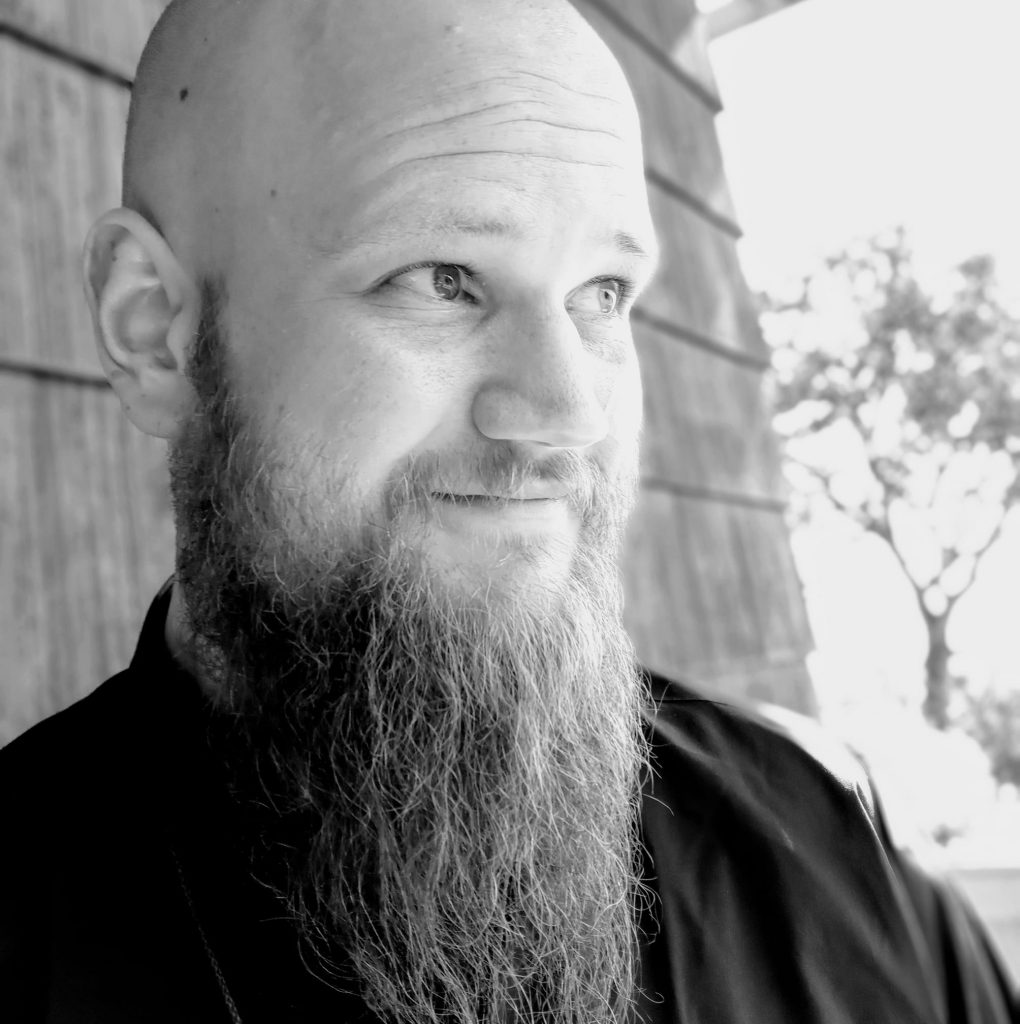
Rev. Thom Muller is pastor at the Swedenborgian Society of the East Bay at Hillside, an Urban Sanctuary, in El Cerrito, CA, as well as senior editor of Our Daily Bread. His passions include the intersection of spirituality and psychology, interfaith theology, and the Western esoteric tradition. A native of Germany, Rev. Muller was ordained into the ministry of the Swedenborgian Church of North America in 2016, upon receiving his theological education at Bryn Athyn College of the New Church and the Center for Swedenborgian Studies and Pacific School of Religion at the Graduate Theological Union in Berkeley.